
Bloopers of Brilliance: When Science Goes Sideways
May 27 - 13:00 - 17:30
Register
Mondai | House of AI is happy to host the next edition of the AI PhD & Postdoc Spring Symposium, together with the TU Delft AI Initiative and the AI PhD Committee!
Bloopers or Brilliance: When Science goes Sideways
(De voertaal van dit event is Engels)
Are you a PhD or postdoc researcher at TU Delft working on AI-related topics? You are cordially invited!
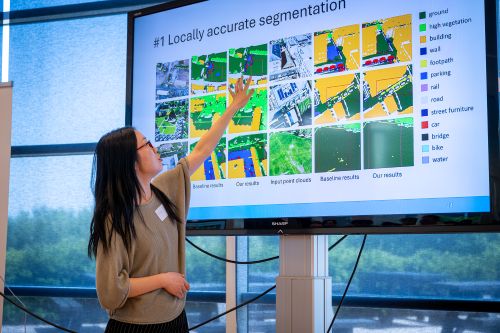
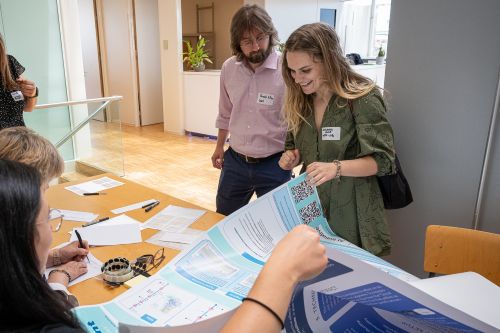
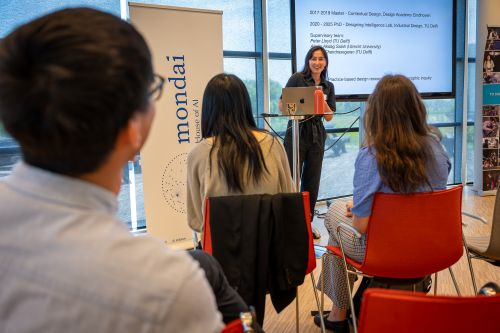
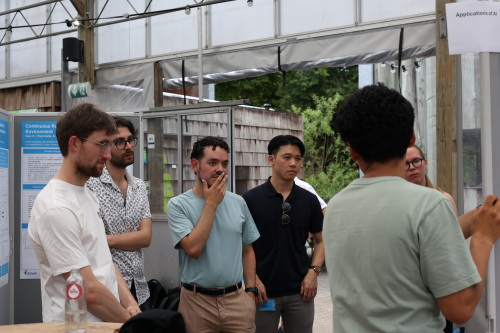
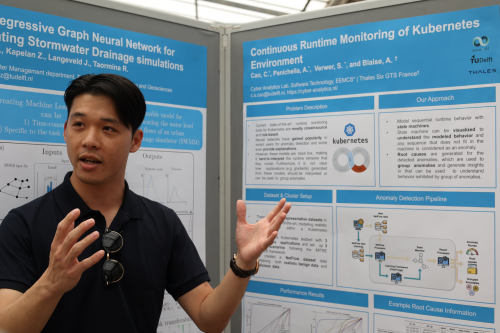
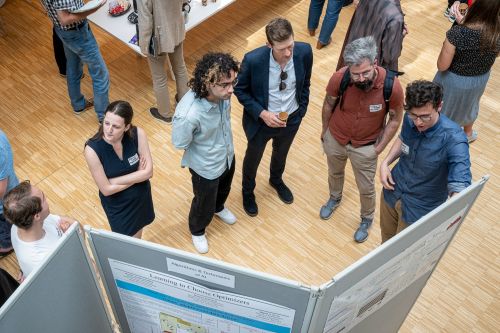
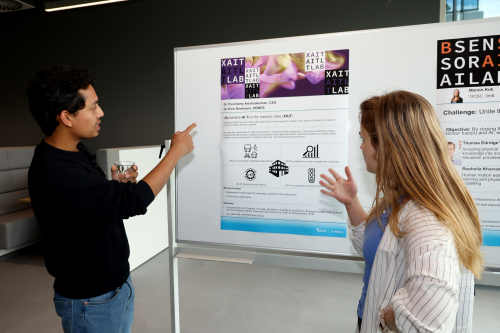
Hosted on Wednesday May 27th (13:00 – 17:30) by Mondai | House of AI at YES!Delft (=updated location), this year’s event is going to shake things up and focus on a less-talked-about side of science – embracing scientific failures! The event includes poster pitches, an interactive panel discussion on the importance of negative results, errors, and failures in science, keynotes from final year PhDs, and the ever-important borrel. It’s an excellent opportunity to present your research (particularly what did not go to plan) and network with fellow AI-focused scholars across campus.
Programme 13:00 – 17:30
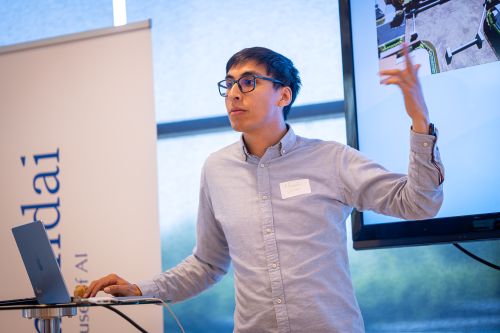
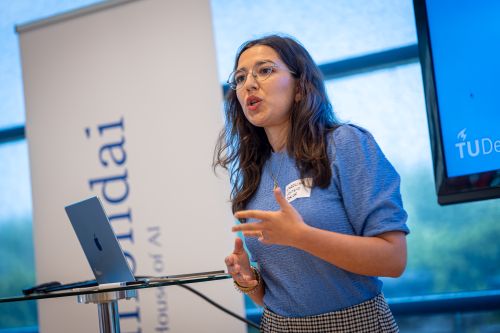
- Keynotes & talks from final year PhDs working in/with AI at TU Delft
- Panel discussion on embracing scientific failure
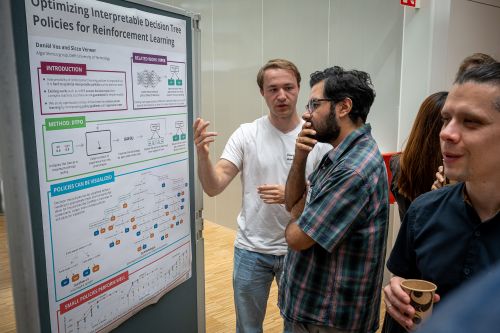
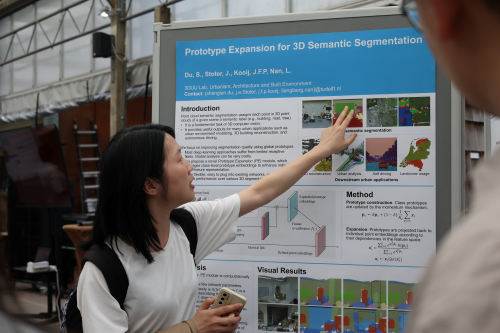
- Poster market: You are invited to contribute to this event with your own poster and/or abstract! See poster requirements below. Final deadline for participating with hand in: May 21st. Deadline for participating without poster and/or abstract: May 26th
The afternoon session will end in a casual manner with drinks, refreshments and an opportunity for networking. More details to be announced so keep an eye on this page for more updates on speakers and panellists!
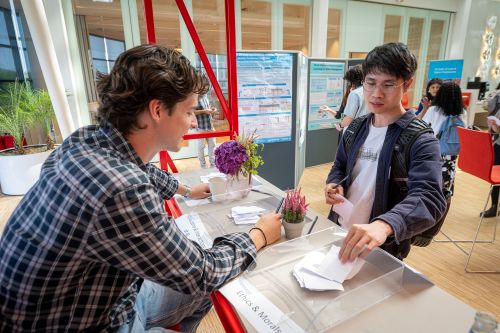
Posters and/or ‘failure’ abstract
Researchers at all stages of their PhD and working in all different areas of AI are welcome:
- Machine learning and foundational AI techniques
- Human-centered AI systems
- Application of AI
- Fairness, bias, legal, and ethical considerations of AI
- Education and AI
- Design with AI
- Reflexive and critical research on AI
- And more…
Prizes for best poster and ‘failure abstracts’: for each a 3-month X subscription!
Requirements
You can choose to participate in this symposium with or without a poster and/or failure abstract. Deadline for posters and abstracts is May 21st.
You can submit either A) a poster with a short description of failure or B) a ‘failure abstract’, aka a short description of the research you wanted to do, but it didn’t quite work out.
- A) If you’re bringing a printed poster, we request a short description of the efforts that went awry before the successful work. What went wrong in the project before it succeeded? It can be a misstep, a small mistake, or a significant error—it can be any way to show that the research is rarely a smooth process.
- B) Alternatively, you can submit a short description explaining the intended goal and how it did not go to plan. Here, you don’t have to have succeeded; it can be an idea that you eventually abandoned!
- For A) Poster A1 or A0 size
- Printing is available via the AI Initiative for new posters in A0 format. Send in as PDF, JPEG, or PNG (portrait mode, 300 DPI).
- For A) and B), we expect abstract submissions of up to 300 words for both types. Send in as PDF or DOC(X).
- Submissions can be made via the registration form available on this page
- For A) Poster A1 or A0 size
Register & submit your poster and/or ‘failure abstract’ by 21st of May.
Any questions? Please contact the AI PhD Committee at AI-PhD-Committee@tudelft.nl
Speakers
Keynotes & talks from final year PhDs
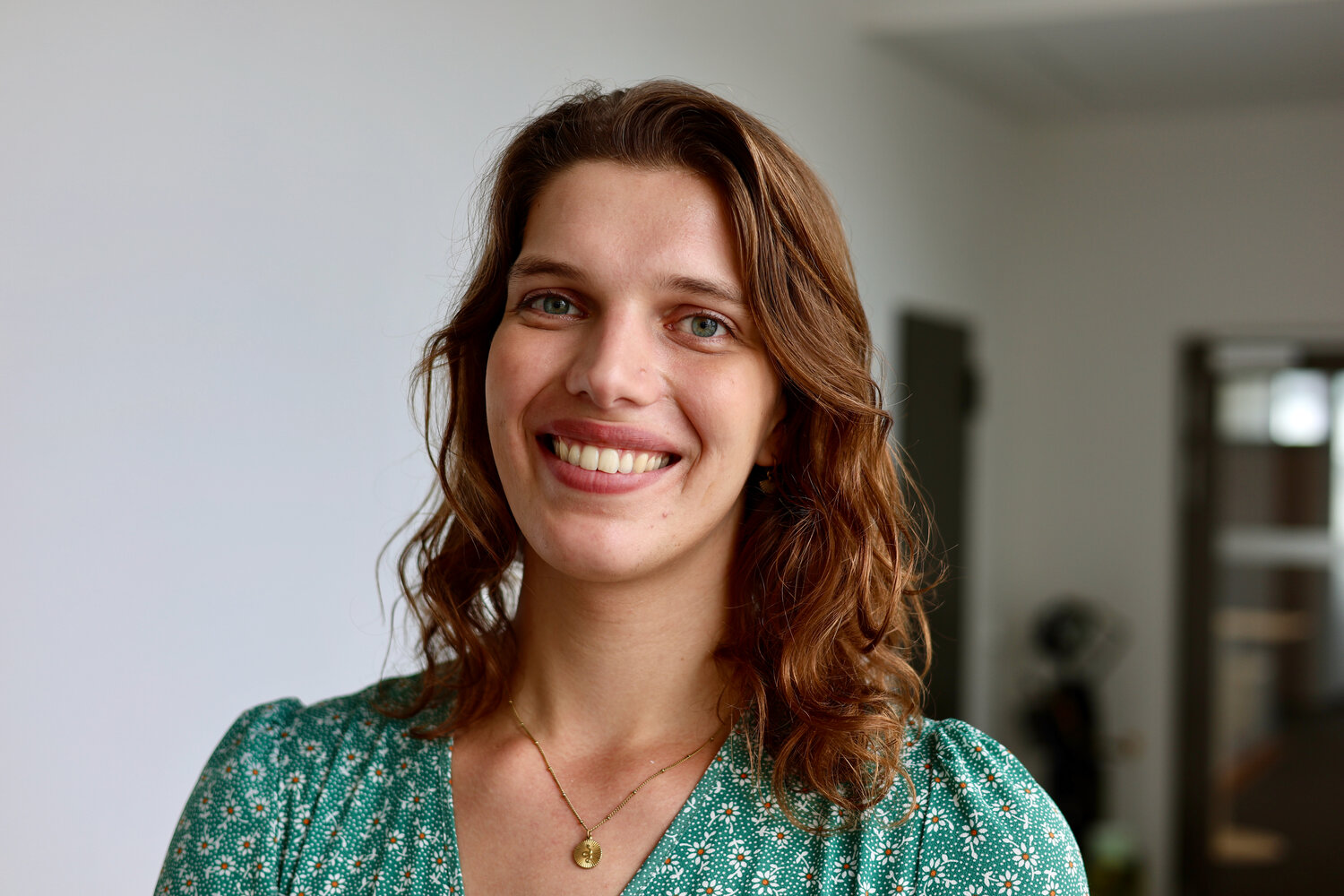 Keynote by Anne Poot (SLIMM Lab, CEG)
Can computation itself be probabilistic? In this talk, I will give a crash course on the finite element method, demonstrate the issue of discretization error, and describe how this error can be modeled probabilistically. We will see that by reinterpreting the finite element method from a Bayesian point of view, we can get better performance in downstream applications such as parameter estimation in inverse problems.
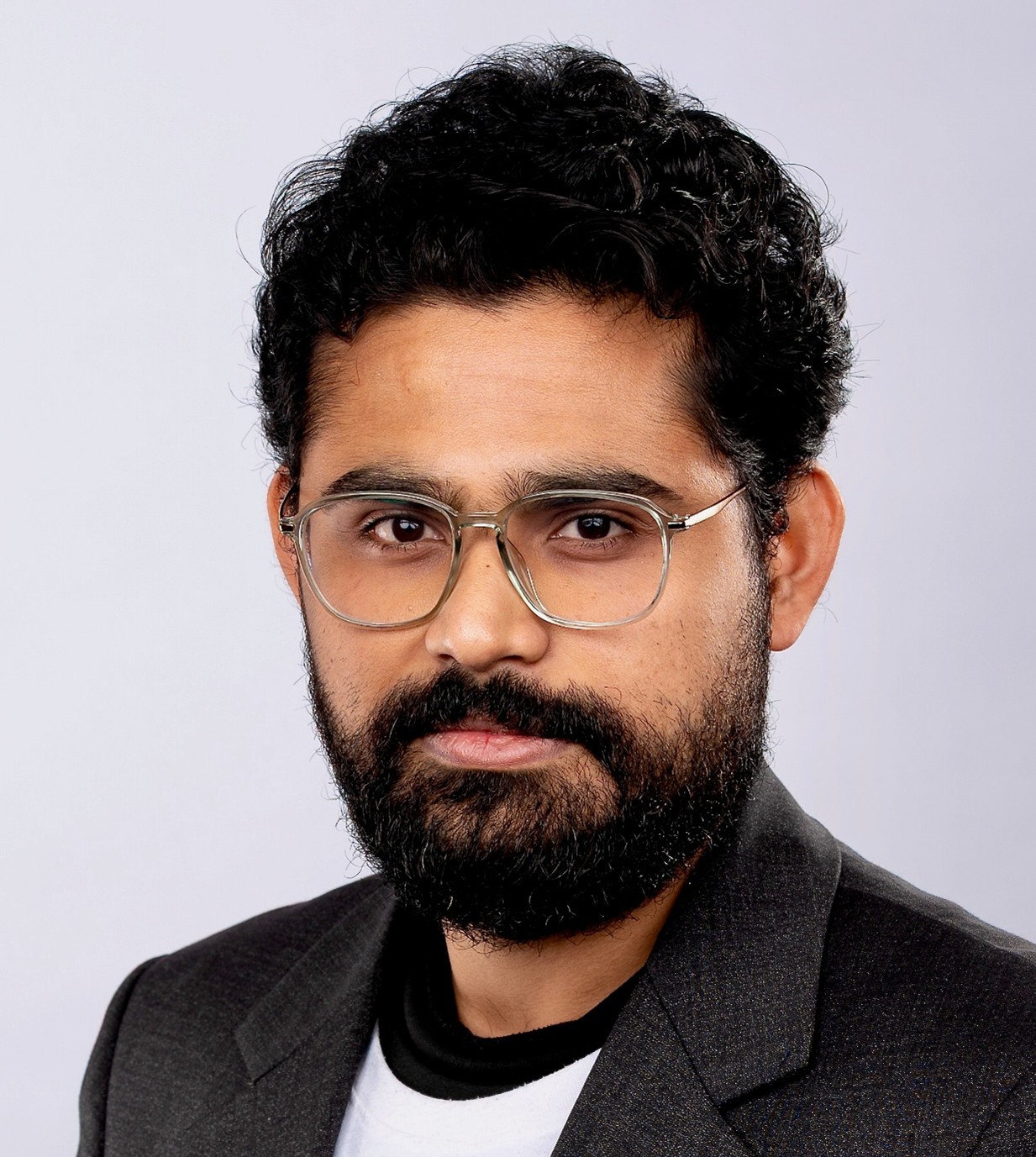
Layman talk by Surya Manoj Sanu (MACHINA Lab, ME)
As engineers, we constantly simplify problems so we can solve them faster. That’s why it sounds counterintuitive to add complexity to an already well-defined structural optimization problem. Why make things more complicated? In this talk, we explore exactly that idea. We introduce an unsupervised neural network — the “extra complexity” — into a traditional topology optimization pipeline — the “simple” engineering workhorse. And surprisingly, this added layer of intelligence can improve how we design structures. But, as in all good science, there’s not only the good. There’s also the bad — and sometimes, the ugly and we will try to unpack all of this!
 Keynote by Casper van Engelenburg (AiDAPT Lab, A+BE)
While image-based retrieval has drastically diversified the use cases of modern-day search engines, their relevance judgments are far from optimal for disciplines like architecture, which heavily rely on visual data that are fundamentally different from the natural photos most search engines are trained on. Where natural photo understanding focuses on appearance mainly (color, texture), architectural drawing understanding is about understanding graphic-like drawings—floor plans, sections, axonometric projections, etc.—that emphasize the composition and organization of the spaces that we live in. Therefore, to accurately judge relevance between architectural drawings, we must rethink what it means to be similar and explore how to train domain-specific models or fine-tune pretrained large vision models on architectural data. In this talk, I will present several of our recent works that highlight advancements in floor plan representation learning and the necessity of building high-quality architectural datasets.
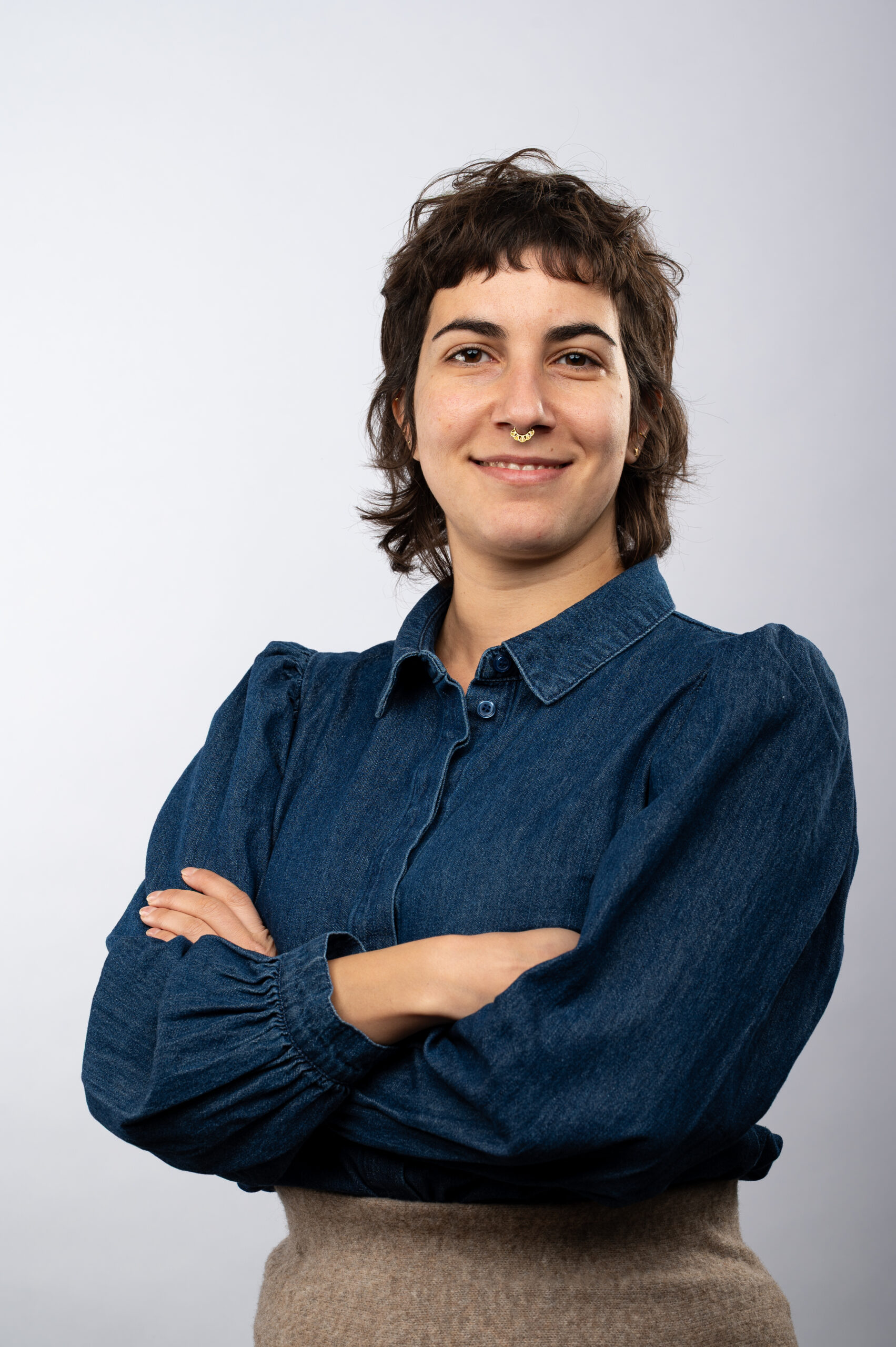 Layman talk by Sofia Kotti (DeTAIL Lab, EEMCS)
Functional ultrasound indirectly measures brain activity through changes in cerebral blood flow. Tensor decompositions provide a natural framework for analysing the acquired data by exploiting their multidimensional structure and expressing them in terms of latent components. This can help identify underlying spatial and temporal patterns in brain activity, supporting improved interpretation of functional ultrasound measurements.
Panel: Embracing Scientific Failure
How can we think about and practically approach our failures in science? And how can we make them visible through, for instance, documentation?
This panel explores what scientific failure really means across different disciplines, from rejected papers and failed grant applications, to broader personal and professional setbacks. Speakers reflect on how failure is defined within their fields, share their own experiences at both an individual and disciplinary level, and discuss how these moments have shaped their work. By examining not just the challenges but also the lessons learned, the panel aims to highlight how failure can be an essential and productive part of the scientific process.
During this panel discussion, Elvire Landstra (Tilburg University), Agostino Nickl (A+BE), Nazli Cila (IDE), and Megha Khosla (EEMCS) will shed light on different definitions of ‘scientific failure’ and how to deal with them.
Panel: Embracing scientific failure
How can we think about and practically approach our failures in science? And how can we make them visible through, for instance, documentation?
This panel explores what scientific failure really means across different disciplines, from rejected papers and failed grant applications, to broader personal and professional setbacks. Speakers reflect on how failure is defined within their fields, share their own experiences at both an individual and disciplinary level, and discuss how these moments have shaped their work. By examining not just the challenges but also the lessons learned, the panel aims to highlight how failure can be an essential and productive part of the scientific process.
During this panel discussion, Elvire Landstra (Tilburg University), Agostino Nickl (A+BE), Nazli Cila (IDE), and Megha Khosla (EEMCS) will shed light on different definitions of ‘scientific failure’ and how to deal with them.
 Agostino Nickl is Assistant Professor of Architectural Intelligence in the Design, Data and Society Group at TU Delft.
A digital architect and scholar, he develops architectural approaches to artificial intelligence, both computationally and conceptually. His doctoral dissertation at ETH Zurich, subtitled ‘An Architect’s Guide to Latent Space’, explores how computational models can serve as instruments of imagination and invention rather than mere automation.
He has served as Visiting Professor at the Politecnico di Milano and as Senior Teaching Fellow at UCL and has taught theory seminars and design studios at ETH Zurich, the Bartlett School of Architecture, and the Oxford School of Architecture. For several years, he worked at Arup’s Digital Studio in London, an interdisciplinary strategic design team focused on innovation and digital transformation. His work has received numerous distinctions, including the Saint-Gobain Innovation Prize, the Bartlett School of Architecture Medal, the Sir Banister Fletcher Medal, the ETH Architecture & Technology Fellowship, and a nomination for the ETH Dissertation Medal.
 Nazli Cila is an Associate Professor in the Department of Human-Centered Design at the Industrial Design Engineering Faculty.
Her research explores how designers, computer scientists, and policy makers can critically engage with AI by developing conceptual frameworks and design methods that promote reflection, responsibility, and imagination in human-AI interactions. She co-directs the AI DeMoS Lab, an interdisciplinary initiative that examines how AI technologies impact democratic practices and how they can be designed in ethically and socially responsible ways.
Megha Khosla is an Assistant Professor in the Multimedia Computing Group within the Intelligent Systems Department at TU Delft.
 Her research focuses on developing explainable and privacy-preserving machine learning methods, with a particular emphasis on structured and relational data such as graphs. She was recently awarded the NWO Vidi grant to investigate the intricate relationship between explainability and privacy in AI systems.
Prior to joining TU Delft, she was a Senior Researcher at the L3S Research Center and Leibniz University Hannover, Germany. She has led several collaborative projects both in academia and in the industry where she spent a three-year stint after her PhD.
 Elvire Landstra is a postdoctoral researcher in Epidemiology at Tilburg University. She obtained a BA in Liberal Arts & Sciences from University College Utrecht (cum laude) and an MSc in Population Health from University College London (with distinction). In 2025, she completed her PhD magna cum laude at the German Center for Neurodegenerative Diseases in Bonn, where her research focused on lipidomics in human health.
In her current role, she works on the more applied side of epidemiology, developing lifestyle interventions for people with type 2 diabetes. In addition to her research, she serves as Editor for the Life Sciences section of the Journal of Trial and Error.
Her research interests lie at the intersection of epidemiology, omics, and lifestyle, with a focus on translating complex biological insights into practical health solutions.
Add to Calendar
Register
Share this event