
AI & Mobility Day
Januari 17, 2025 - 9:00 - 16:00
AI & Mobility Day – Discovering the Future Today
The world of transport, mobility and logistics is on the brink of an unprecedented transformation, driven by rapid developments in artificial intelligence (AI). This technology has the potential not only to revolutionise the way we move, but also to address fundamental efficiency, sustainability and safety challenges.
Imagine a future where traffic congestion is a thing of the past thanks to intelligent traffic systems that use real-time data to optimise traffic flows. Or imagine autonomous vehicles that not only improve road safety but also make mobility more accessible to all. AI makes it possible to optimise logistics chains, allowing goods to reach their destinations faster and with less environmental impact. However, with these advances also come important questions and responsibilities. How do we integrate AI ethically and responsibly into our transport systems? How do we ensure user privacy and security in an increasingly connected world? And how do we ensure that technological innovations contribute to societal goals and do not lead to new forms of inequality?
A day full of inspiration and interaction
During TU Delft’s festive Dies Natalis week “Making Sense of Mobility”, Mondai | House of AI is pleased to host a day full of inspiration, innovation and interaction, where together we will shape the future of AI in mobility.
In cooperation with the TU Delft | AI Initiative, AI-hub Zuid-Holland, Mobility Innovation Centre Delft (MICD) and the Transport & Mobilitity Institute (TMI) we bring together leading experts from science, industry and government to address these questions.
This AI & Mobility Day you can expect:
- In-depth keynote presentations from renowned speakers sharing their views on the impact of AI on mobility and society.
- Interactive sessions where you will gain hands-on experience with the latest AI applications and methodologies.
- Panel discussions on ethics and policy, where we explore the complex issues surrounding privacy, security and human autonomy.
- Networking opportunities with professionals, researchers and policymakers to exchange knowledge and initiate new collaborations.
- Opening of the DIAMonDlab, our new innovation centre that will be a hub for pioneering research and development at the intersection of AI and mobility.
- AI and Mobility demo & poster market, an interactive space where research projects will present their latest insights.
The day is aimed at anyone involved or interested in the future of mobility – from engineers and data scientists to policymakers and entrepreneurs. Whether you want to learn about the latest technological innovations, discuss the ethical implications or expand your network, this event offers something for everyone. Places are limited, so be quick! Let’s shape the mobility of the future together and ensure that AI has a positive and sustainable impact on our society.
AI & Mobility Day (preliminary programme)
09.00 – 09.30 Check in & coffee
09.30 – 12.30 AI & Mobility: Innovation, ethics & the road to the future
12.30 – 13.30 Break with lunch & market
13.30 – 16.00 AI & Mobility: Innovation, ethics & the road to the future
16.00 Drinks
Speakers
Distinguished Professor Smart Urban Mobility (TU Delft)
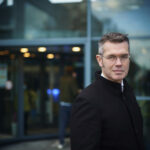
Professor Serge P. Hoogendoorn is an expert in the field of traffic and transportation engineering. He is a distinguished professor in Smart Urban at Delft University of Technology in the Netherlands.
With a strong focus on traffic flow theory, pedestrian and crowd dynamics, and intelligent transportation systems, Professor Hoogendoorn has significantly contributed to advancing knowledge in traffic and transportation domain.
His research encompasses the development of mathematical models and simulation tools to understand and improve traffic flow and pedestrian movement in urban environments.
He has published extensively in academic journals and has been involved in numerous national and international research projects aimed at enhancing the efficiency and safety of transportation networks.
Professor Hoogendoorn is also recognized for his work on data-driven approaches and the application of artificial intelligence in transportation systems. His efforts in integrating traditional engineering principles with innovative data science methodologies are testaments of his the pursuit for smarter, more efficient urban transportation solutions.
Director Mobility Innovation Centre Delft (MICD)
 Dr. Sascha Hoogendoorn-Lanser, Director of the Mobility Innovation Centre Delft and part of TU Delft’s Innovation & Impact Centre, leads strategic initiatives that shape the future of transportation.
Her work focuses on advancing innovative technologies and policies to create a sustainable, safe, inclusive, and future-proof mobility system, encompassing optimized passenger transport and resilient freight infrastructure. Sascha leads AIM-TT (AI Learning Initiative for Multi-modal Traffic and Transportation), a collaborative effort with private and public stakeholders.
This initiative explores the potential of AI in the MTL domain, emphasizing practical learning from real-world applications. It focuses on co-developing knowledge through use cases, each tailored to different temporal and spatial scales, transportation modes, application contexts (e.g., regular operations and disruptions), data availability, and other critical factors.
Pro Vice Rector Magnificus Artificial Intelligence, Data and Digitalisation (TU Delft)
© 2017 Mark Prins
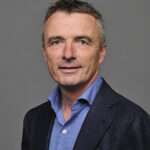
As PVRM AI, Geert-Jan Houben leads the TU Delft activities in the field of AI, data and digitalisation, for education, for research and valorisation, and for relevant support. This includes leading the TU Delft AI Initiative, the university-wide program to coordinate and support all activities and developments around AI and education, research and innovation.
It also includes the establishment and support of TU Delft AI Labs to promote cross-fertilisation between AI experts and scientists who use AI in their education and research.
The role of the PVRM AI also includes the representation of TU Delft in regional, national and international co-operation on this theme.
Business Development Manager at Siemens Mobility
 Marco Hennipman is currently the Teamlead digital business and innovation at Siemens Mobility Netherlands. He is a TU Delft alumni who, since his graduation, has been specializing in building IT solution within the mobility domain.
He is passionate about improving travelers experience via Demand Responsive Transport, Traveler Flow and Mobility as a Service solutions.
Assistant Professor at Faculty of EEMCS (TU Delft), co-lab director XAIT Lab
Emir is an Assistant Professor at the Algorithmics group at the Department of Software and Computer Technology. His primary research interest lies in solving complex real-world problems through combinatorial optimisation and its integration with machine learning. His research includes both developing general-purpose algorithms and applications.
Assistant Professor at Faculty of CEG (TU Delft), co-lab director DAIMoND Lab
 Yanan Xin is an assistant professor at the Department of Transport and Planning at TU Delft, co-director of the DAIMoND (Digitization and AI for Mobility Network Dynamics) lab.
With a goal of promoting responsible AI transformation in transportation, her research interests cover interpretable machine learning, spatial causal inference, mobility-based anomaly detection, and the intersection between mobility and energy.
Assistant Professor at Faculty of CEG (TU Delft), co-lab director DAIMoND Lab
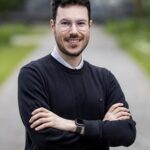 Marco Rinaldi is assistant professor in Advanced Traffic Management. His research involves computational modelling and problem-solving for Multimodal Traffic Management, investigating aspects of data collection, availability and processing, as well as applications of novel techniques (AI) for fast, responsive and resilient decision support systems.
Assistant Professor at Faculty of ME (TU Delft), ELLIS Scholar
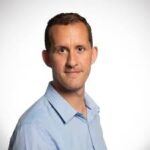 Dr. Holger Caesar is an Assistant Professor in TU Delft’s Intelligent Vehicles group, specializing in deep learning for autonomous vehicle perception and planning.
Prior to joining TU Delft, he worked in a major autonomous vehicle company and developed leading datasets and methods for 3D object detection.
Assistant Professor at Faculty of CEG (TU Delft), co-lab director CityAI Lab & lab director ADaS Lab
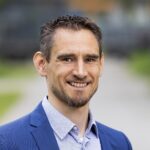 Dr. Simeon Calvert is associate professor of Smart & Automated Driving in the department of Transport & Planning at the TU Delft. He is director and founder of the Automated Driving & Simulation (ADaS) research lab and co-director of the CityAI-lab for research on urban behaviour using AI.
He is also a board member of the Centre for Meaningful Human Control over AI, the interdisciplinary research program for responsible autonomous technology. His research is focussed on the impacts of technology on road traffic through experimentation, conceptualization and simulation.
Assistant Professor at Faculty of ME (TU Delft), co-lab director HERALD Lab
 Arkady Zgonnikov is an interdisciplinary cognitive scientist specializing in modeling human driver behavior and applications of human models for automated driving.
Arkady’s work bridges diverse disciplines such as cognitive science, artificial intelligence, and ethics of technology. He is a co-director of the HERALD Lab (Human-aware robust AI for automated driving) and a director for partnerships and collaborations at the Centre for Meaningful Human Control.
Future of Mobility, Deloitte
 Robert Jan ter Kuile leads the Future of Mobility theme within Deloitte. He works with public as well as private clients in the transition to clean mobility and livable cities, because it is the collaboration between public and private sectors which will enable a new mobility system.
Robert Jan has been working in mobility eco system since he graduated in Transport and Planning at TU Delft in 2006.
Manager Mobility & Transport, d-fine
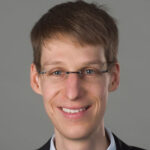 Sebastian Schwinn is Manager at d-fine, where he is mastering analytical, quantitative, and technological challenges of clients in the area of mobility and transportation.
His project experience covers data modelling in public traffic, the development of data platforms for advanced analytics, and implementations of data-driven use cases – such as an on-demand mobility analytics platform or prediction models for traffic jam detection.
Before joining d-fine more than five years ago, he had studied mathematics and received his PhD at TU Darmstadt.
Professor of Traffic Simulation and Computing at Faculty of CEG (TU Delft)
 Hans van Lint is Antonie van Leeuwenhoek professor traffic simulation and computing at the transport and planning department of the CEG faculty, with a mission to contribute to the science of describing, modeling, simulating and predicting road traffic over all spatiotemporal scales, and using that knowledge to build applications for practice that help solve some key problems on our planet: traffic (un)safety, emissions, congestion.
Hans acquired over 11 ME in grants to support his mission, graduated 17 PhD students with 8 in the pipeline and is highly active in many international projects and collaborations.
CEO of Arane
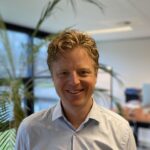 Erik-Sander Smits is a partner at Arane, with extensive experience as a data scientist and consultant in traffic management.
He specializes in data-driven research and has contributed to the development of innovative traffic management solutions in various urban areas. Passionate about practical innovation, he strives to bring cutting-edge solutions into real-world applications.
Assistant Professor at Faculty of CEG (TU Delft)
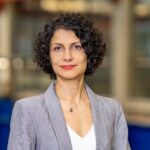 Mahnam Saeednia is an Assistant Professor at the Faculty of Civil Engineering and Geosciences at TU Delft in the department of Transport and Planning.
Mahnam’s area of research addresses current challenges of freight transport sector, specifically in the domains of automation, digitalization and energy transition.

(C) Roel Dijkstra Fotografie / Foto: Robert Vos
Prof. Tina Comes is a Professor in Decision Theory & ICT for Resilience at the TU Delft (NL). Her research combines behavioural insights and value considerations with computational models and AI.
She recently chaired the Evidence Review Report on Strategic Crisis Management in the EU under Science Advice for Policy-Makers by European Academies. She is a member of the Norwegian Academy of Technological Sciences and the Academia Europaea, and she serves as Editorial Board Member for Nature Scientific Reports.
Associate Professor at Faculty of EEMCS (TU Delft)
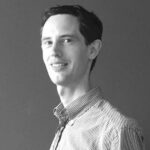 Neil Yorke-Smith directs the Socio-Technical Algorithmic Research (STAR) Lab at TU Delft. His research addresses a fundamental question of the AI era: how can technology help people make decisions in complex socio- technical situations?
Yorke-Smith is an Associate Professor in the Faculty of Electrical Engineering, Mathematics and Computer Science (EEMCS/EWI), Delft University of Technology.
Add to Calendar
Share this event